Symson, an AI pricing platform for B2B wholesalers, distributors and manufacturers, has been ranked 13th in the 2026 Deloitte Technology Fast 50 Netherlands, with four-year revenue growth of 1,043%, up from 819% when we placed 12th last year. Doing it twice is harder than it looks. The four-year window moves on each year, so last year's growth becomes this year's starting line.
We'll be honest: 13th doesn't have quite the ring of a podium place. But there's a detail in the rankings we're quietly proud of. Symson was founded in 2018, and eight of the twelve companies above us are younger. The Fast 50 measures percentage growth, which naturally favours young companies growing from a small base. Growing like this eight years in tells a different story, and we think it says as much about the market as it does about us.
Of the six companies in this year's top twenty that also made last year's list, only two improved on their previous growth figure: Symson and Aquablu, who climbed to third place with an impressive 3,859%. Congratulations to the Aquablu team.
How has buying pricing software changed?
A couple of years ago the word was automation. Now it’s visibility: who changed this price and why, which customers get which discounts, and whether last year's price increase actually stuck. Plenty of businesses only change prices once a year, or sell through partners who set the final price. For them, control and evidence matter far more than speed.Buying pricing software has shifted from a first look to a comparison: most teams SYMSON meets already have an Excel model, BI dashboard or quoting tool in place.
SYMSON has talked to pricing teams since 2018, and the conversation has changed fast. As recently as early 2025, many were seeing a pricing platform for the very first time. The questions were simple: what does this actually do, and can it show me what my competitors charge?
That's changed. Today, most of the people we speak to already have something in place: a margin model someone built in Excel, a BI dashboard, a quoting tool. They don't need convincing that pricing matters. They want to know what we'll show them that they can't already see, whether it'll cope with their data, and how they can prove the value before they commit.
What makes a business look at pricing software?
In Symson's conversations, a pricing project almost always starts with a change elsewhere in the business:
- System change: a new ERP or webshop that forces everything to be rebuilt
- Leadership change: a new owner, a new pricing lead, or investors asking harder questions
- Cost shocks: raw materials, freight or energy moving faster than the price list can
- Regulation: new rules on discounts that mean you need to prove your price history
- Scale: more products, channels or countries than one spreadsheet can hold
What eight years has taught us
The worries pricing teams bring to Symson haven’t changed much in eight years. Pricing teams don't want a price they can't explain to their sales team or their finance director. They don't want another tool that creates more work than it saves. They don't want prices changing without anyone signing them off. And they don't want to wait a year to find out whether any of it was worth it.
If one thing has stayed constant since 2018, it's the belief that pricing works best when the people responsible for it stay in charge of the decisions. Software can work through thousands of products, but the judgement about what a business wants its prices to say stays with the business.
What has changed is how businesses want to begin. More of the teams we meet want to start with something small and specific, see it work on their own data, and build from there. It's a more sensible way to adopt anything, and it has shaped a lot of how we've worked this year.
Where does AI fit in pricing decisions?
In pricing, Symson uses AI as the engine, not the driver.In pricing, AI works best as the engine, not the driver. It does the heavy lifting across thousands of products, but the people who know the customers stay at the wheel.
For all the talk about AI, it isn't what most of this year's Fast 50 is built on. Only a handful of the fifty are built around AI itself, from drone autonomy to sovereign AI cloud. More use it to power a product built for one job, as we do for pricing. But most are growing fast by solving very practical problems: payments, energy, compliance, logistics, hosting and hardware.
That matches what we hear from pricing teams. Few of them ask for AI for its own sake. They ask for prices they can explain, decisions they can trace and changes they can sign off. AI earns its place when it helps with that, and not when it takes the decision away.
Thank you
The businesses we talk to today are bigger, sharper and more demanding than they were two years ago. They compare, they build their own models, and they want proof from their own industry. Honestly, we love that. It's a healthier market for pricing, and it rewards experience over novelty.
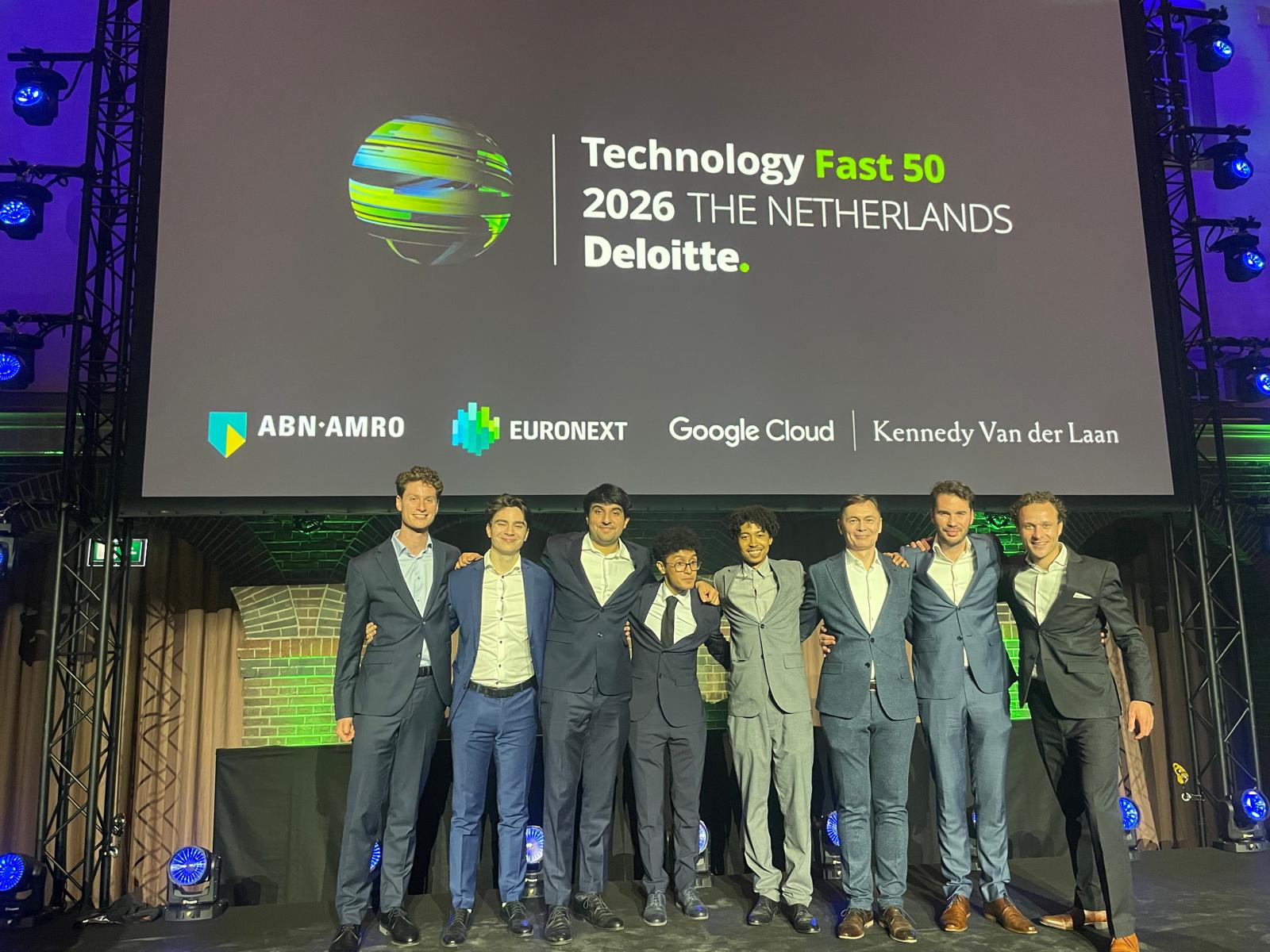
The winners of the 27th Technology Fast 50 were announced on 5 November 2026 at Het Scheepvaartmuseum in Amsterdam. Congratulations to Intelic, Sweav and every company on this year's list. And the biggest thank you goes to our team and our customers. Trusting someone with your pricing is a big deal, and we don't take it lightly.
Do you want a free demo to try how SYMSON can help your business with margin improvement or pricing management? Do you want to learn more? Schedule a call with a consultant and book a 20 minute brainstorm session!